Tuesday, 16 October 2012

Viral Advertising

Viral advertising uses social networking sites, email and other approaches to gaining awareness for a new brand, or marketing through spreading viruses. There are a few ways that it can be spread: by word of mouth, via the Internet, or via mobile. It might take the form of games, e-books, video clips, web pages, email, text messages, or images.

There are 6 main reasons why people utilise viral advertising:


  1. Gives away valuable products/services
  2. Easy transfer to others
  3. Easy scale from small to large
  4. Takes advantage of common behaviour
  5. Uses existing networks of communication
  6. Takes advantage of others' resources

Examples of viral videos:


Promoting Evian


Promoting T-Mobile


HD Camera Trick Challenge


The first video draws on people's sense of humour, and uses an extreme to make us laugh. The second two pull on our curiosity.


Viral adverts for films:


For the Blair Witch project, instead of releasing a typical movie trailer, the producers released clips of the camera jostling and muffled sounds to attract curiosity and interest for when the film was finally released. This was a cheap way of advertising, and raised awareness and intrigued larger audiences to want to watch the film.


The singer held a contest on YouTube to encourage people to make their own music videos to her song Tik Tok. This also reached out to social networking sites, and people had to ask their friends to vote for them to win.


The Dark Knight's filmmaker Chris Nolan released images of the Joker saying 'See you in December' on the website www.whysoserious.com. It became instantly popular, and resulted in the film grossing 1 billion dollars worldwide.
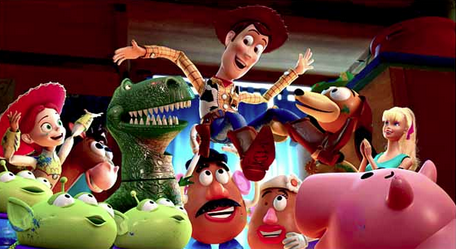


Toy Story 3 released Ken-themed viral videos which were very popular. A few examples were 'Groovin with Kevin' and 'Ken's dating tips'.


Viral Marketing Campaigns


Viral marketing is a method of film or a products promotion that relies on getting 
customers/audience's to market an idea, product, or service on their own by telling their friends about it, usually by e-mail or websites. Viral Marketing encourages individuals to pass on a marketing message to others, the advantage of getting people to pass on a marketing message is helpful as the people become their marketing team that costs the company nothing.


This involves the audience and brings the film to life as this excites the audience! The viral market was marketed in London, the Middle East, Pennsylvania and India which made the film known world-wide. They included a range of institutions to help them such as bowling alleys, cake shops etc and campaigned to the public through phone and email. This is viral campaigning at it's best as they reached a world wide audience through emails and phone-calls to follow clue's and instructions involving the film, this excites the audience and makes them already aware of the film before it's release.


Viral Adverts.


The Cadbury's Gorilla Advert is a British advertising campaign launched by Cadbury Schweppes in 2007 to promote Cadbury Dairy Milk-brand chocolate. The 90-second television and cinema advertisement,appearances on billboards, print newspapers and magazines, television and cinema spots, event sponsorships.The advertisement, is known world-wide and is seen in other countries such as Canada, Australia, South Africa and New Zealand.


Cadbury famously used viral advertising on another advert!
http://lurnq.com/lesson/section/352/cadbury-eyebrows-example-2009/ 


Journey Task

30 second Journey

For our 30 second film, we will start from outside, show the character starting from the ground floor of the building, and walking all the way up to the fourth floor. We will use elliptical editing to cut out parts of the sequence so that the clip isn't too long, and then show the character entering a classroom. By doing this, we will be able to practice using the 180 degree rule and breaking it. The staircase sequence we have researched will break the 180 degree rule, and so will the part where the character enters the classroom through the door.


We will compare our elliptically edited film with the original, long film which shows every section of the journey so that we can fully see just how elliptical editing is effective for making a film more visually interesting to watch. 


Elliptical Editing is a shot transitions that omit parts of an event, causing an ellipsis in plot and story duration. We decided to do this type of editing to show a person entering a building and entering their classroom because although it shows all the scenes and locations where the characters enters, it has skipped time out to make the journey time shorter. I like this type of editing as it is a good and a more natural way to skip out time where as for example Jump Cut Editing.


A Jump Cut is an elliptical cut that appears to be an interruption of a single shot. We have chosen to edit the same journey differently to show the difference between Jump Cut editing and elliptical editing when editing a scene. Jump cut completely skips out time which sometimes doesn't look natural to the audience. We used Final Cut Express to edit both of these to differently to show two different scenes. Although this wasn't my favourite type of editing, i think this was the easiest to edit as you can miss out big parts.

Monday, 8 October 2012

180 Degree Rule Research


http://www.moviemistakes.com/best_continuity.php
Even huge films and successful directors still manage to break continuity from time to time, here are examples of some successful films that have made movie mistakes:


Techniques to stop breaking continuity


This video from YouTube demonstrates the 180 degree rule and how you can break continuity by this rule, it shows once you have established a scene, you have also established where the characters are (the 180 degree rule) and that throughout the film you must stay at the same side of the room to not break the rule which will confuse the viewer. This video also shows you how you can break the 180 degree rule without breaking continuity- through tracking around the couple to show the audience that the camera is moving round, this must not be edited out as this would confuse the audience because they will be on opposite sides and the characters eye-lines would not match.


You can also not abide by the 180 degree rule when film someone walking up a flight of stairs because the person is only going one direction- up, filming at the back, left or right  doesn't change the vision of the scene.


Another way of not breaking continuity is filming your character going through a door way. Same idea as the stairs, they are still going one way-forward, this means it doesn't matter which side you chose to film at as it will not effect the scene.


During our Short film, we are wanting to use a variety of shots, this video shows us how to use different varieties of shots in scenes. I found this video useful as it showed a variety of different shots and how these are presented to the audience.


The 30 Degree Rule Page


The 180 degree Rule

 The 180 Degree Rule


The 180 degree rule is a part of continuity in filming. It gives the audience a perspective of where characters are in relation to the location/setting. When you have filmed a character from one side, you cannot film them from the opposite side, otherwise the audience will become very confused as to what is happening. 

However, there are a few ways in which you can break the 180 degree rule without confusing the audience too much...


When and how can you break continuity by breaking the 180 degree rule? 


  • By moving the camera while the camera is running without cutting.
  • Track around a conversation of two people talking. (Without cutting, the audience can still see where the two characters are in relation to one another, so it does not matter that both of their sides are being filmed, because there is no cutting.)


  • On a flight of stairs because they are still going up. (The 180 degree rule does not matter as much when filming characters climbing or descending stairs, because either way they are still moving up or down.)

    • In a doorway because it can only open one way.(Here the 180 degree line does not matter as much because the door only opens one way, so the audience do not get confused if the shot changes position.) 
    • By filming on the middle of the 180 degree line and then on the other side of the line.

    These are the ways in which we can utilise the breaking of the 180 degree rule, without complicating a scene or confusing the audience.

    Filmmaking Techniques Video


    We found this video very interesting because it recaps all the different filming techniques that can be used, including shots, lighting, camera movements...etc. By watching this video, we were able to consider our own film and decide if we could utilise any of the techniques we had seen.

    After watching this video, we decided that in our film, when the teenager is looking at her phone to show the audience that her parents are always texting them asking where they are, we will use a 'depth of focus' shot. This will work in the way that the teenagers sits down on the bed, then the focus shifts from the teenager to the mobile phone sitting on her bedside table. At this point, she reaches out to take it and there is a close up of the text messages.


    Saturday, 6 October 2012

    Final Draft Photo Storyboard

    Below is our final draft of our storyboard without the title sequences as we will decide where to place the text when editing our film. We have had to change a few things, for example walking with the dog in the park, changing our male character to female and also we did not plan the weather conditions, however we adapted to these situations and made the best we could with what we had to work with.


    Location photos

    Below are all the photos of the location we are going to use. With this, we can now put together a photo storyboard that will help us to visualize what our film will look like.


    Living Room


    The living room is where the film will start. Our props will include a notepad and pen which will go on the coffee table to spell out the production name. The main character will be sitting on the sofa, and he mum will be standing by the door. These photos were shot from the same angle the film will be shot in.


    Hallway


    The hallway will be the second place the two characters move to as the main character prepares to go upstairs. The parent will follow, leading them both out of the living room. These photos were shot from the angle that the film will be shot in.

    Stairs


    From the hallway, the characters will next be seen by the stairs. The main character will go up the stairs, but the parent will remain at the bottom, still talking. These photos were shot from the angles we will be using during our shoot. One from the top of the stairs, and one from the bottoms of the stairs.


    Landing


    Again, these photos were shot from the angle we will be shooting the shots from. The main character will reach the top of the stairs, turn left, cross the landing and follow the hallway to her bedroom.


    Bedroom


    Some of these shots like the one above of the window and bookshelf will not be used in our film, although they do show the layout of the room we will be shooting in. There is plenty of room for the camera, the actor and the crew to gather inside at one time, and this also gives us an idea of where the light will be coming in. The shot of the door handle and the desk close-up are particularly important because they are the exact shot we will be using in the film. The desk shot will highlight the position of the main prop which is the phone, but as well as a CU we will be using an over-the-shoulder shot of the main character to allow us to use a change of focus from the character to the prop. 
    The photos of the bed are an estimate of where the camera will be in relation to the furniture. This distance may alter on the day as we may choose to move the camera closer, and even lower it a little.


    Kitchen


    These shots of the kitchen will be used as the main character sneaks back downstairs and out of the back door. Again, there is enough space to fit the camera, any lighting equipment, the cast and the crew all at one time, even though it is a narrow room.

    Street


    These shots of the street outside the house are just to show the route we will be using to film on Day 2 of Production. Millie will come out of her house, down the driveway, and along the street in the direction of the park. These are high-angle shots taken from an upstairs window, and will not be the actual shots we will use when shooting.


    Park


    The 1st, 3rd, and 4th photo of the park will definitely be the shots that we will use during filming. The first shot will be when the character looks over and sees James and Jodie arguing by the park's entrance. The 3rd shot will be when the main character isn't looking where she is going and bumps into Jodie, and the third shot of the swings will be as Jodie sits on them and takes some time to think.